When you start a company, branding usually gets pushed to “later” — product first, sales first. The problem is that your market is already forming an opinion about you, with or without your permission. A brand is not the handsome logo you bolt on at the end; it is what your customer remembers, trusts, and repeats. This is a practical guide to getting it right from the start, written for a founder who wants to sell, not to win a design award.
A brand is what is left when you leave the room
Start with the invisible part: what your company does, who it is for, why it is different, and what it promises to deliver every time. That is the brand. The logo, the colors, and the type come later, and their only job is to make that decision visible. Flip the order and open with “what color should I use?” and you end up with an identity that has no argument behind it — the kind a customer forgets on the spot.
Write one sentence that says what your company stands for and which problem it solves better than anyone else. If you cannot get it into one sentence, you do not have a brand yet. You have a name.
Know who you are talking to before you talk
A startup does not sell to “the public.” It sells to a specific customer with a specific problem. Before you settle on a tone or a look, define that person: what they need, what frustrates them, where they compare options, what would make them pick you over the competitor next door.
That research is not a luxury reserved for large companies. An hour on the phone with five real customers tells you more than any assumption you can make in a conference room. The brands that connect are the ones that say back to the customer, in their own words, what they already feel.
The decisions you make once and then leave alone
- Value proposition. One clear line on why you and not someone else. If a competitor could lift it word for word, it is not finished.
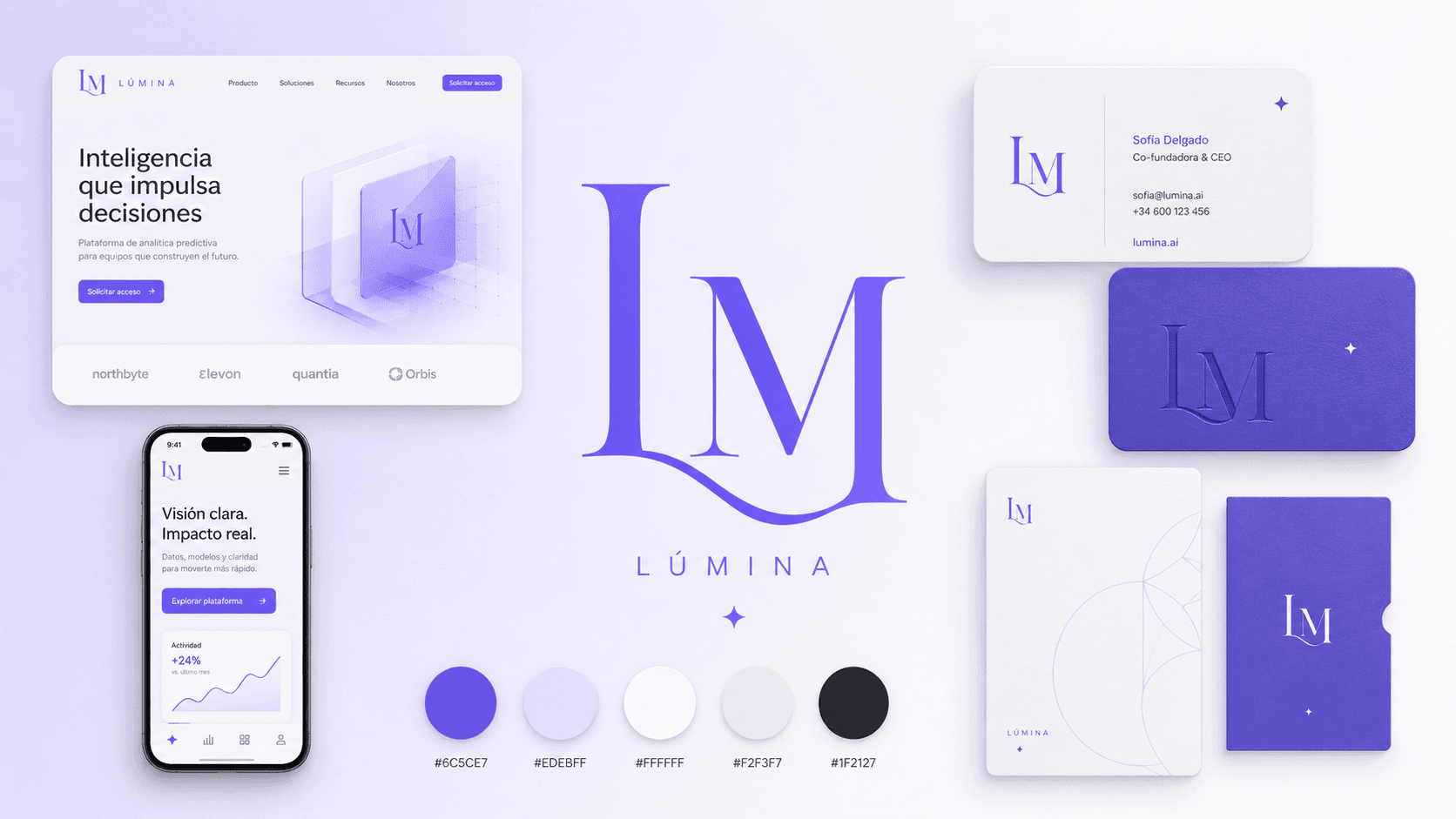
- Name and logo. Memorable, legible on a small screen, functional in black and white. Elegance gets judged on a phone, not on a wall.
- Color and type. One palette and two typefaces, not ten. Restraint is what makes a brand look serious.
- Voice. How your company writes and answers. A consistent voice is worth more than a perfect logo.
Consistency is what turns a logo into a brand
The most common startup mistake is not picking the wrong colors — it is using them differently every time. The site says one thing, Instagram says another, the invoice says a third. Every time your company looks different, the customer starts trusting you again from zero.
A consistent brand — same logo, same colors, same voice, same standard — across the site, social, email, and every invoice you send makes each touchpoint add up instead of cancel out. That accumulation is what customers describe as “they look professional.”
The short version
Building a startup brand means deciding what you stand for, who you are talking to, and how you look and sound every single time. Design is the last step; the argument is what holds it up. Getting it right early saves you years of looking improvised.
We build brand identities on an argument, not a template: the positioning, the visuals, and the full system, so your company looks equally solid on the site, on social, and on the invoice. If you want your startup standing on something that holds, build your project in minutes.
We do not just write about this. We build it and we run it.
Stores, integrations, websites and intelligence already in production. Serving North America and LATAM since 2008.